

What Is a Limit Switch?
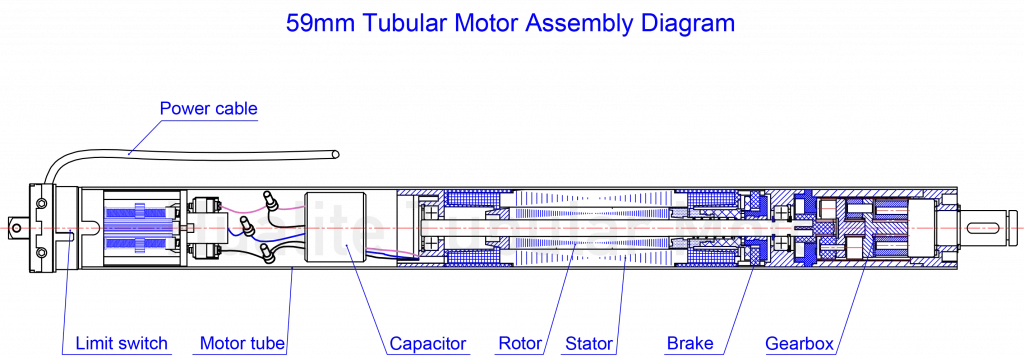
A limit switch is a control device used to stop a motor automatically when it reaches a preset position. In tubular motors, the limit switch defines the upper and lower travel points, so the motor knows exactly where to stop during opening and closing.
Without a limit switch, the motor would continue running after the roller blind, roller shutter, awning, or screen has already reached the end of its travel. This could damage the fabric, tube, motor, or mechanical structure. That is why the limit switch is one of the most important parts inside a tubular motor system.
For motorized blinds and shutters, limit switches improve safety, accuracy, and long-term durability. They help the motor repeat the same stopping position every time, which is essential for both residential and commercial installations.
Why Is a Limit Switch Important?
A limit switch is important because it controls the travel range of the motor. It prevents over-rotation and protects the system from mechanical stress.
In a tubular motor, the limit switch helps:
- stop the motor at the correct upper position
- stop the motor at the correct lower position
- protect the blind or shutter from over-travel
- improve repeated positioning accuracy
- reduce wear on motor components
- support safer and more stable operation
For applications such as roller blinds, roller shutters, awnings, zip screens, and projection screens, correct limit setting is critical. Even a high-quality motor will not perform well if the limit positions are not properly controlled.
How Does a Limit Switch Work?
A limit switch works by detecting when the motor has reached a preset travel point and then cutting or changing the control signal to stop movement.
In tubular motors, the switch is usually linked to the motor’s rotation and travel distance. When the motor shaft turns enough to reach the preset upper or lower limit, the switch activates and tells the motor to stop.
The exact working principle depends on the motor type:
1. Mechanical Limit Switch
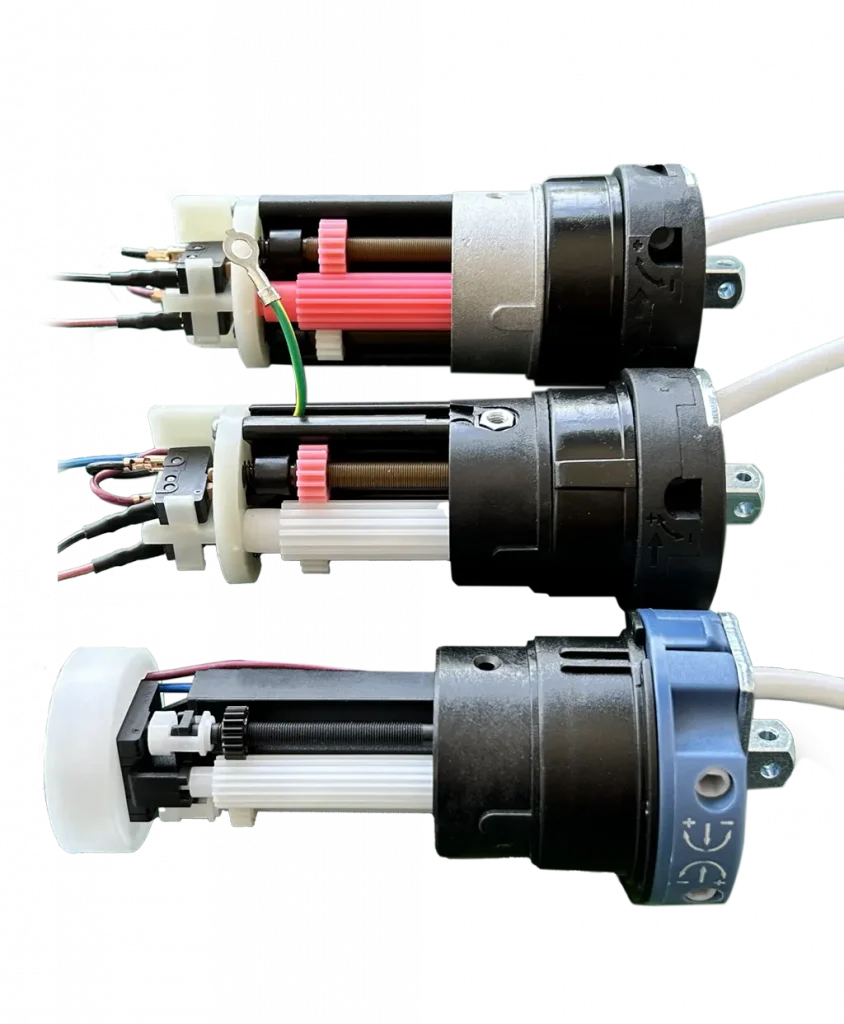
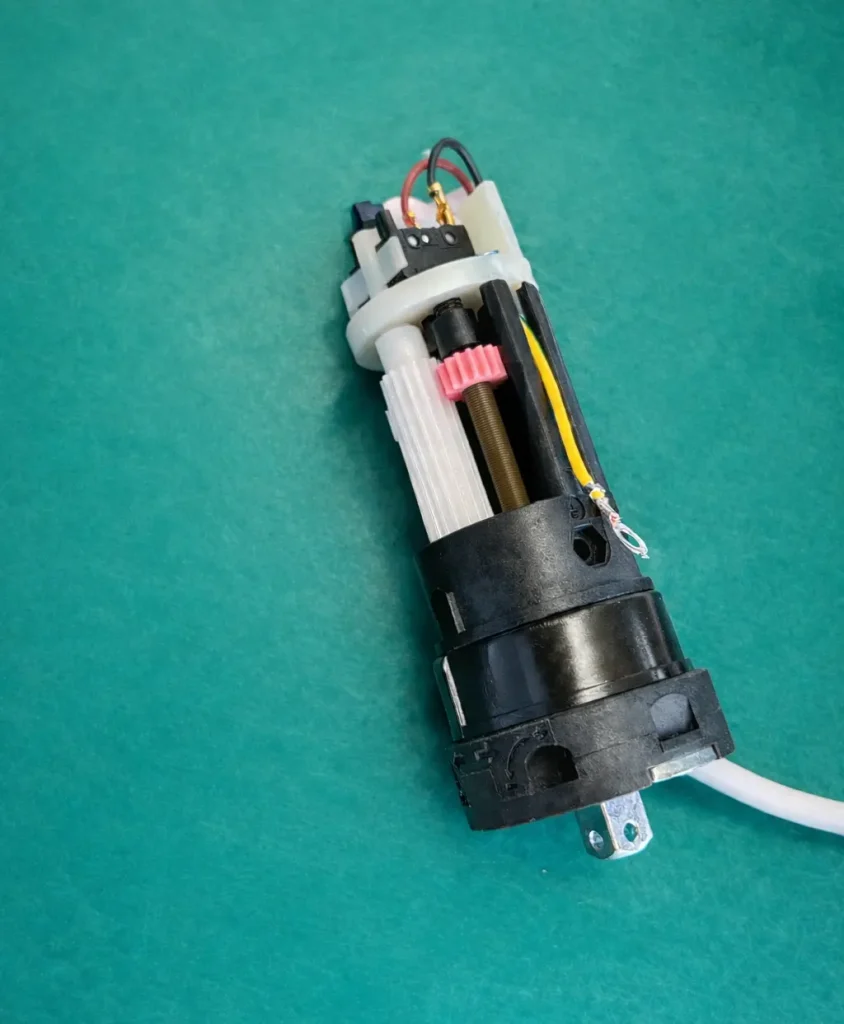
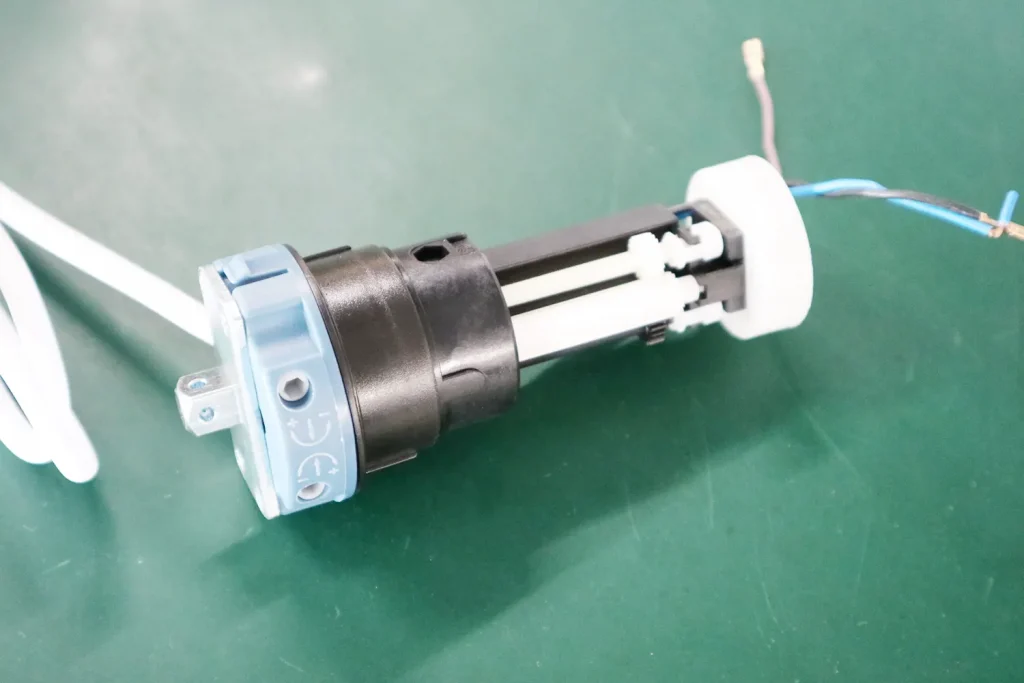
In a mechanical limit switch system, the travel limits are adjusted manually using setting screws or adjustment tools. These screws define how far the motor can rotate in each direction.
When the motor reaches the preset position, the internal mechanical mechanism stops further travel. Mechanical limit switches are widely used because they are simple, reliable, and cost-effective.
2. Electronic Limit Switch
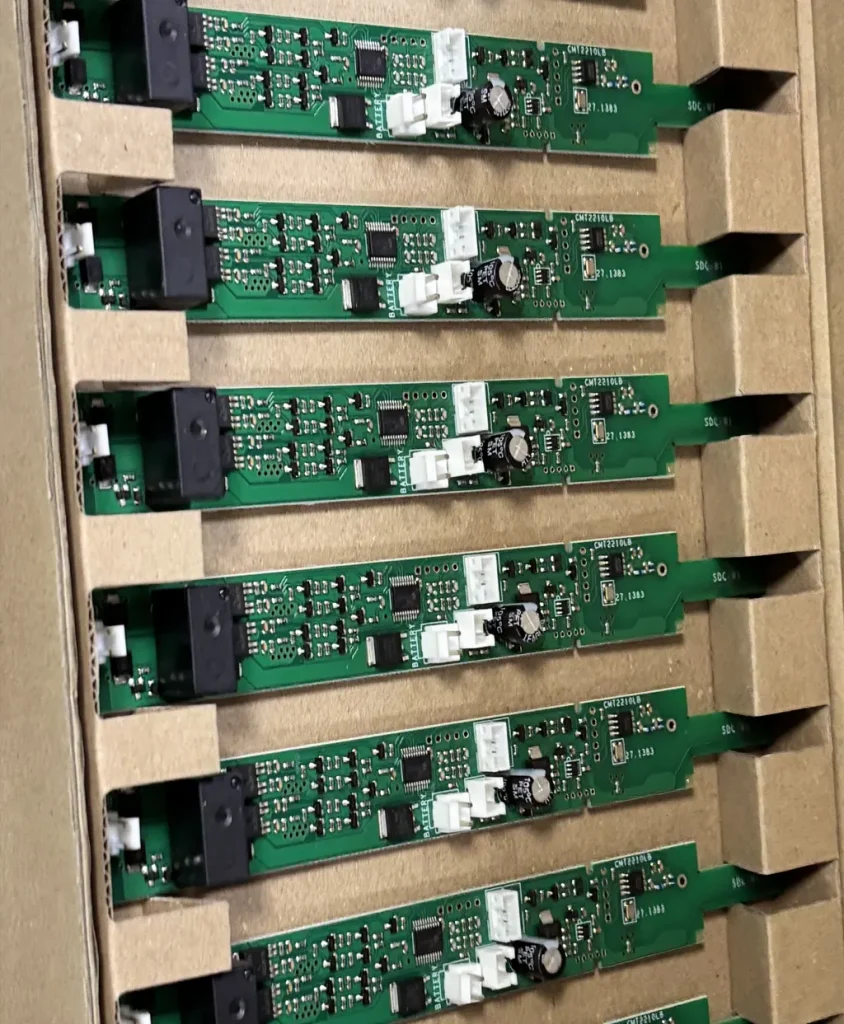
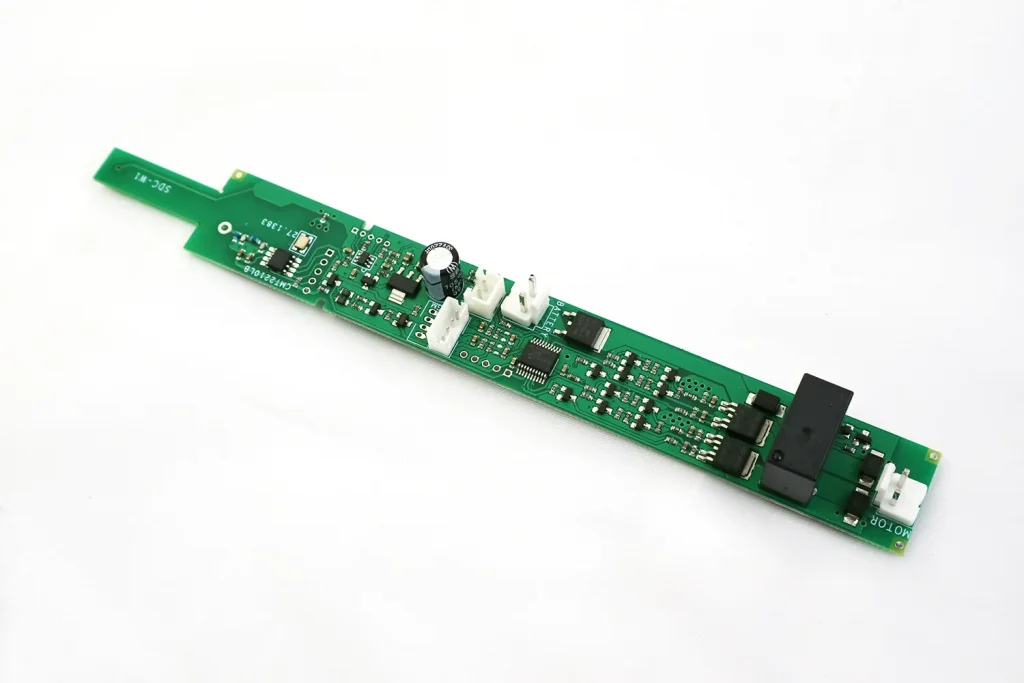
In an electronic limit switch system, the limit positions are set digitally or electronically rather than by purely mechanical adjustment. These motors usually offer more precise setting and may support easier programming, better repeatability, and additional smart control functions.
Electronic limit switch motors are often preferred for advanced roller shutter and smart shading applications where accuracy and automation are important.
Main Types of Limit Switches in Tubular Motors
In the tubular motor industry, the two most common types are mechanical limit switch motors and electronic limit switch motors.
Mechanical Limit Switch Motor
Mechanical limit switch motors use adjustment screws to set the upper and lower stop points. This type is popular for many standard shading and shutter systems.
Advantages:
- simple structure
- stable and proven design
- easy to understand
- cost-effective
- suitable for many standard projects
Common applications:
- roller shutters
- roller blinds
- awnings
- projection screens
Electronic Limit Switch Motor
Electronic limit switch motors use electronic programming to memorize the travel positions. They are more advanced and often provide more accurate travel control.
Advantages:
- high positioning precision
- easier repeated setting
- smart control compatibility
- suitable for advanced systems
- better for high-end or automated projects
Common applications:
- smart roller shutters
- premium blinds
- integrated building shading systems
- applications requiring precise stop positioning
Limit Switch in a Tubular Motor
A limit switch in a tubular motor is the internal mechanism that controls the end points of motor travel. Because tubular motors are installed inside the roller tube, the limit switch must work accurately and consistently in a compact space.
When a tubular motor is installed in a roller blind or roller shutter, the motor rotates the tube to raise or lower the material. The limit switch ensures that the tube stops at the correct fully open and fully closed positions.
This function is especially important in:
- roller blinds, where the fabric should stop neatly at the correct drop
- roller shutters, where over-travel can damage slats or the end lock system
- awnings, where extension and retraction need controlled stopping points
- zip screens, where accurate travel affects tension and appearance
What Happens If There Is No Limit Switch?
If a motor has no limit switch or the limit setting is wrong, several problems can happen:
- the blind may roll too far up and wrinkle
- the shutter may overrun and damage slats
- the fabric may stop unevenly
- the motor may continue pushing against the end position
- internal parts may wear faster
- the installation may become unsafe or unreliable
This is why limit switch adjustment is a basic but essential part of motor installation.
Mechanical vs Electronic Limit Switch
When choosing between mechanical and electronic limit switch motors, the decision depends on the application, budget, and control requirements.
| Type | Mechanical Limit Switch | Electronic Limit Switch |
|---|---|---|
| Setting method | Manual screw adjustment | Electronic programming |
| Cost | Lower | Higher |
| Precision | Good | Higher |
| Operation | Simple | More advanced |
| Smart compatibility | Basic | Better |
| Best for | Standard projects | Premium or smart systems |
For many standard roller shutter and roller blind projects, mechanical limit switch motors are a strong practical choice. For smart homes, premium shading systems, or projects requiring precise repeated positioning, electronic limit switch motors are often a better fit.
How to Set a Limit Switch
The basic method depends on the motor model, but the process usually includes:
- install the tubular motor correctly in the tube
- run the motor in the up and down directions
- adjust the upper limit point
- adjust the lower limit point
- test the full travel several times
- fine-tune if necessary
For a mechanical limit switch motor, the installer usually turns the adjustment screws in small steps until the desired stop position is reached.
For an electronic limit switch motor, the installer may use a programming sequence, remote control, switch input, or setting tool to save the travel points.
Proper testing is essential after setting. The motor should stop smoothly and consistently at both ends.
Applications of Limit Switch Tubular Motors
Limit switch systems are widely used in many motorized shading and closure solutions:
Roller Blinds
A limit switch helps the fabric stop at the correct height and protects the blind from over-rolling.
Roller Shutters
A limit switch protects the shutter slats and helps ensure safe open and close positions.
Awnings
A limit switch controls full extension and retraction, helping maintain stable operation.
Zip Screens
A limit switch supports accurate travel and consistent screen tension.
Projection Screens
A limit switch ensures the screen stops in the correct viewing position.
How to Choose the Right Limit Switch Motor
When selecting a tubular motor with a limit switch, consider the following factors:
Application Type
Choose a motor based on whether it is for roller blinds, roller shutters, awnings, or screens.
Torque Requirement
The motor torque must match the weight and size of the system.
Control Method
Consider switch control, remote control, WiFi, Zigbee, or smart home integration.
Precision Requirement
For standard applications, a mechanical limit switch may be sufficient. For higher precision, electronic limit switch motors are often better.
Installation Environment
Outdoor or heavy-duty systems may require stronger durability and more stable travel control.
Conclusion
So, what is a limit switch?
A limit switch is the device that tells a motor where to stop. In tubular motors, it controls the upper and lower travel limits, protects the system from over-travel, and ensures smooth, reliable movement.
Whether you choose a mechanical limit switch motor or an electronic limit switch motor, the goal is the same: accurate stopping, better protection, and longer service life.
For roller blinds, roller shutters, awnings, and other motorized shading systems, the limit switch is a small component with a very important job.
FAQ
What is a limit switch in a tubular motor?
A limit switch in a tubular motor is the mechanism that controls the upper and lower stop positions of the motor. It prevents over-travel and helps the motor stop at preset points.
How does a limit switch work?
A limit switch works by detecting when the motor reaches a preset travel position and then stopping the motor automatically.
What is the difference between a mechanical limit switch and an electronic limit switch?
A mechanical limit switch uses manual screw adjustment, while an electronic limit switch uses programmed or digital settings for travel control.
Why is a limit switch important for roller shutters?
A limit switch protects the roller shutter from over-travel, reduces mechanical stress, and helps the shutter stop safely in the correct position.
Are electronic limit switch motors better?
Electronic limit switch motors usually offer higher precision and easier repeatable setting, but the best choice depends on the project requirements and budget.
Can a tubular motor run without a limit switch?
A tubular motor should not operate normally without a proper limit switch system, because it may overrun and damage the blind, shutter, tube, or motor.