

Roller Shutter Motor Installation: Complete Guide for New and Existing Shutters
Intro
Roller shutter motor installation is one of the most effective ways to upgrade manual shutters into a safer, quieter, and more convenient system. Whether you are working on a new project or upgrading an existing shutter, the right motor installation improves daily operation, reduces manual effort, and supports smart control integration.
This guide explains how roller shutter motor installation works, how to choose the correct motor torque, what to check before installation, and how installation changes depending on shutter size, weight, and material.


Why Install a Roller Shutter Motor?
A motorized roller shutter system offers much more than simple convenience. For homes, shops, offices, and commercial buildings, motorization can improve:
- Daily comfort and easier opening or closing
- Better control for large or heavy shutters
- More stable movement and reduced manual wear
- Compatibility with wall switches, remote controls, and smart systems
- Better safety when combined with obstacle protection and locking accessories
In modern projects, customers no longer want only a manual shutter. They want a system that is reliable, quiet, and easy to operate.
Can an Existing Roller Shutter Be Motorized?
Yes. In many cases, an existing roller shutter can be motorized without replacing the whole shutter system.
Retrofitting is usually possible when:
- The shutter slats are still in good condition
- The guides are aligned and not excessively worn
- The roller box has enough space for a tubular motor
- The shaft diameter matches a compatible motor and adapter set
- A power supply can be provided safely
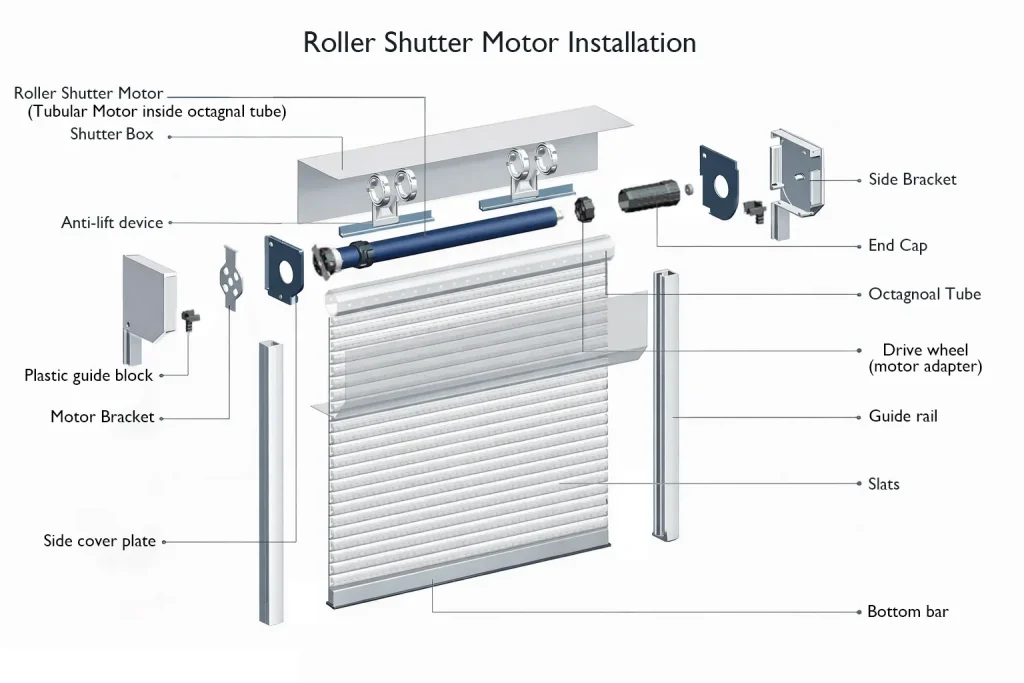
For many retrofit projects, the original manual shaft is replaced with a motorized tube, typically with suitable brackets, crowns, and drive adapters. This allows installers to modernize older shutters with limited structural changes.
What to Check Before Roller Shutter Motor Installation
Before selecting or installing a motor, check the full shutter system carefully.
1. Shutter weight
The motor torque must match the real weight of the shutter curtain. PVC, insulated aluminum, and steel shutters all require different torque levels.
2. Tube diameter
The motor must fit the roller tube correctly. Common tube sizes include 40 mm, 60 mm, and 70 mm octagonal tubes, depending on the application.
3. Box space
The shutter box must provide enough installation space for the motor head, crown, drive wheel, wiring, and limit adjustment.
4. Power supply
Confirm whether the motor will use:
- hardwired wall switch control
- built-in radio receiver
- smart controller integration
- battery or low-voltage solution in special cases
5. Mechanical condition
A motor should never be used to “force” a damaged shutter to work. If the guides, shaft, slats, or end locks are worn or misaligned, the motor will suffer higher load, overheating, and early failure.
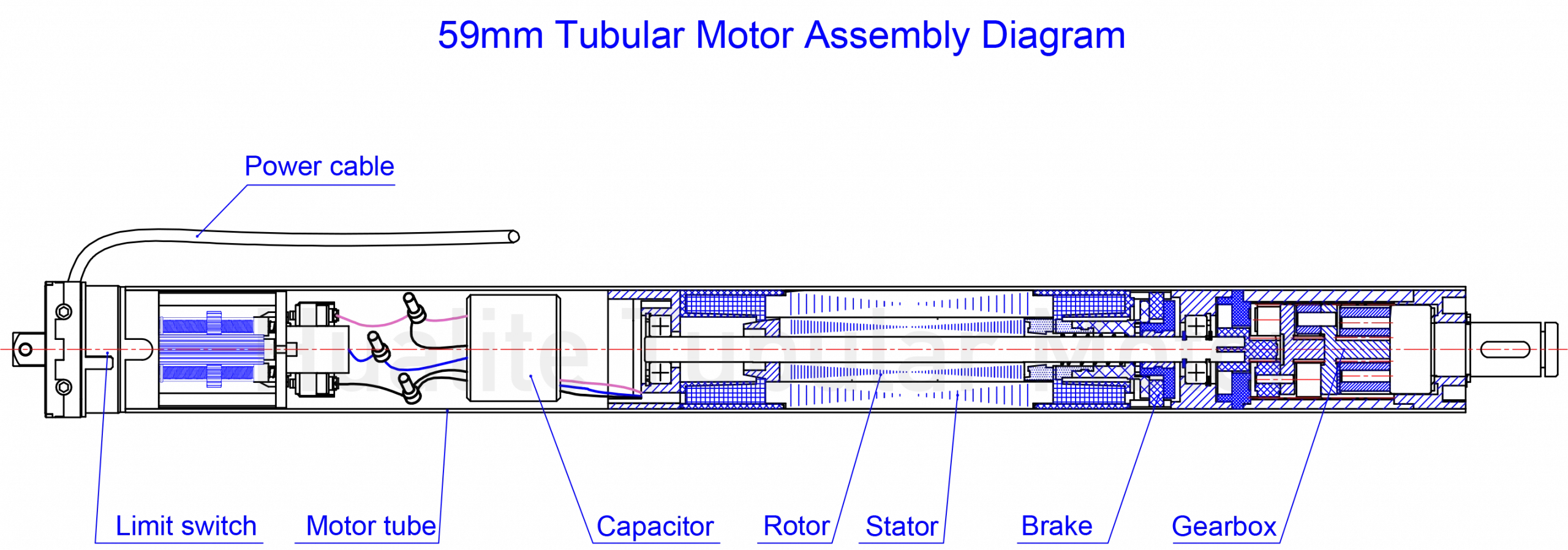
To know more about tubular motor products range
How to Choose the Right Motor Torque for Roller Shutter Motor Installation
Torque selection is one of the most important parts of roller shutter motor installation.
If the torque is too low:
- the motor may struggle to lift the shutter
- operation becomes noisy or unstable
- service life is reduced
- overload shutdown may occur
If the torque is too high:
- cost increases unnecessarily
- installation may become less optimized
- the motor may not be the best fit for the tube and shutter size
General torque guidance
- Small roller shutters: lower torque motors
- Medium residential shutters: medium torque motors
- Large or insulated shutters: higher torque motors
- Heavy steel shutters: heavy-duty tubular motors with stronger output
Torque selection should be based on:
- shutter height
- shutter width
- slat material
- total curtain weight
- shaft diameter
- operating frequency
For professional projects, always calculate actual shutter weight first and then match the motor accordingly.
Learn how to choose a roller shutter motor
Step-by-Step Roller Shutter Motor Installation
Step 1: Inspect the shutter system
Check the slats, guides, shaft, brackets, and box. Make sure the shutter can move smoothly before motorization.
Step 2: Select the right tubular motor
Choose the motor according to torque requirement, tube size, control mode, and installation space.
Step 3: Prepare the shaft and accessories
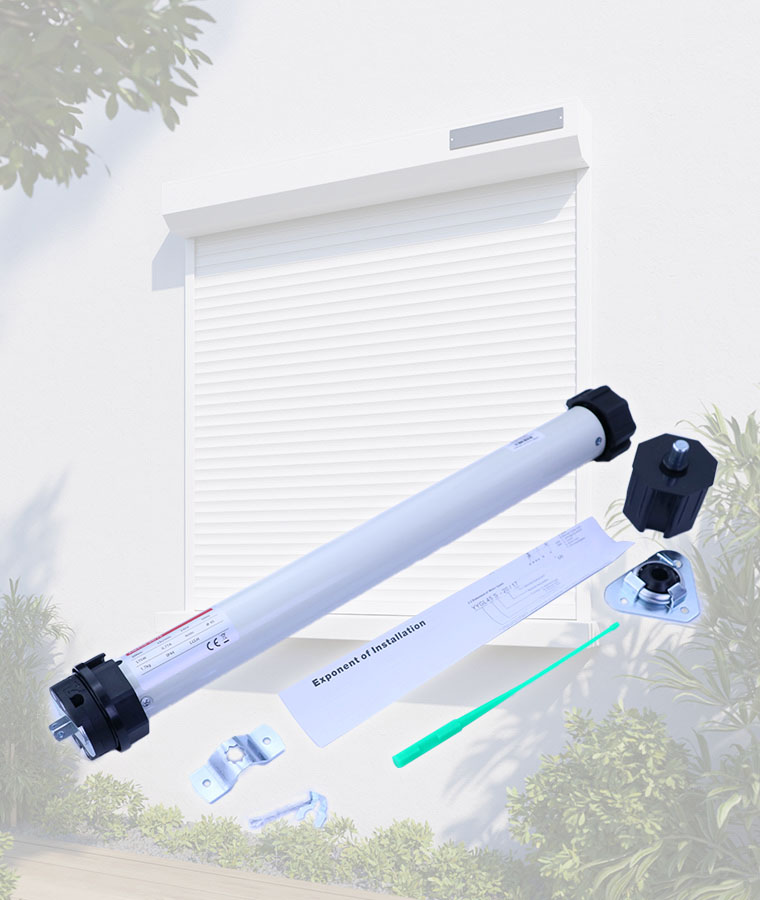
Install the correct crown and drive wheel, fit the motor into the roller tube, and secure the motor head with the proper bracket.
Step 4: Fix the motorized tube in position
Mount the shaft securely inside the shutter box. Confirm the tube rotates smoothly without wobble or friction.
Step 5: Connect the shutter curtain
Attach the shutter curtain to the shaft using suitable hangers or fixing links. Make sure the curtain is centered and balanced.
Step 6: Complete wiring or control pairing
For wired systems, connect the motor to the switch and power supply correctly. For radio motors, pair the remote control and test signal response.
Step 7: Set upper and lower limits
Adjust the motor limits carefully so the shutter stops exactly in the correct open and closed positions. Accurate limit setting protects both the motor and the shutter.
Step 8: Test full operation
Run multiple opening and closing cycles. Check for:
- smooth travel
- stable stopping points
- quiet operation
- no rubbing, jamming, or uneven winding
A professional installation should feel smooth, precise, and quiet from the first cycle.
Installation Differences by Shutter Material
PVC roller shutters
PVC shutters are lighter, so they usually require lower motor torque. However, they still need correct limit setting because lightweight curtains can shift or wind unevenly if the system is not aligned.
Insulated aluminum roller shutters
These are common in residential projects because they combine low weight with better insulation. They are generally easy to motorize, but installers must ensure stable guide movement and accurate stop settings.
Extruded aluminum roller shutters
Extruded aluminum shutters are heavier and stronger. They need more torque and more careful attention to shaft strength, fixing accessories, and long-term mechanical reliability.
Steel roller shutters
Steel shutters are heavy-duty products used in shops, warehouses, and security applications. They require stronger tubular motors, more precise load calculation, and in many cases enhanced safety accessories or emergency solutions.
Retrofit Installation: Special Points for Existing Shutters
Retrofit projects are different from new installations because the existing shutter system may have hidden limitations.
Important retrofit checks include:
- Is the existing box large enough for the motor head?
- Can the old shaft be reused, or should it be replaced?
- Are the guides straight and smooth?
- Is there safe access for wiring?
- Does the customer want switch control, remote control, or smart control?
In retrofit work, the best installation is not always the fastest installation. Careful preparation saves time later by avoiding rework, noise complaints, and motor overload problems.
Common Mistakes in Roller Shutter Motor Installation
Choosing motor torque only by guess
A motor should never be selected without considering shutter weight and size.
Ignoring poor shutter condition
If the shutter is bent, dragging, or misaligned, motorization will not solve the issue.
Wrong adapter or tube matching
Incorrect crowns and drive wheels can create slipping, vibration, or poor torque transmission.
Inaccurate limit setting
Poor limit adjustment can force the shutter at the top or bottom and shorten motor life.
Untidy wiring
Messy wiring complicates service and may reduce reliability over time.
No final cycle testing
Every installation should be tested through repeated open-close cycles before delivery.
How to Improve Reliability and Service Life
To ensure long-term performance, focus on these points:
- use the correct motor torque
- match the motor to the correct tube system
- set limits accurately
- keep shutter movement smooth and balanced
- choose reliable motors with thermal protection
- use quality brackets, adapters, and fixing accessories
- perform final testing before handover
A good motor matters, but a good installation matters just as much.
Why Choose Walter Tubular Motors for Roller Shutter Installation
Walter tubular motors are designed for stable, quiet, and durable roller shutter automation. They are suitable for both new installations and retrofit projects and are available in multiple torque options for different shutter sizes and weights.
Key advantages include:
- reliable torque output
- compatible solutions for common tube sizes
- smooth and quiet operation
- mechanical or electronic limit options
- remote control and smart control options for selected models
- suitable solutions for residential and commercial roller shutters
Whether you are an installer, distributor, or project buyer, choosing the right motor makes installation easier and long-term performance more dependable.
FAQs About Roller Shutter Motor Installation
Can I install a motor in an existing roller shutter?
Yes, in many cases existing shutters can be motorized if the shutter, guides, and box are in suitable condition.
What motor torque do I need for a roller shutter?
It depends on shutter width, height, material, weight, and shaft size. Torque should be calculated based on the actual load.
Is roller shutter motor installation difficult?
For an experienced installer, it is straightforward. The key is proper inspection, correct torque selection, suitable accessories, and accurate limit setting.
Which is better: wired or radio control?
Wired motors are simple and cost-effective. Radio motors are easier in retrofit projects and provide more convenient control.
Can roller shutter motors be used with smart home systems?
Yes, many modern systems can be integrated with smart controllers, timers, or home automation platforms.
What causes roller shutter motors to fail early?
Common causes include wrong torque selection, poor shutter condition, incorrect installation, limit setting errors, and excessive friction in the guides.
Get the Right Roller Shutter Motor for Your Project
Choosing the correct motor is not only about lifting the shutter. It is about ensuring smooth installation, reliable daily use, and long service life.
If you need help selecting the right tubular motor for a new or existing roller shutter project, Walter can help you choose the correct torque, tube size, control type, and installation solution.
Contact us today for technical support, product recommendations, or bulk project quotations.
To get more information about tubular motor
Learn more about roller shutter motors
www.hltmotor.com