

Looking for a complete guide?
👉 Read our detailed article: What Is a Tubular Motor (Full Guide)
Tubular Motor Structure, Types and Components Explained
Tubular Motor Structure and Components
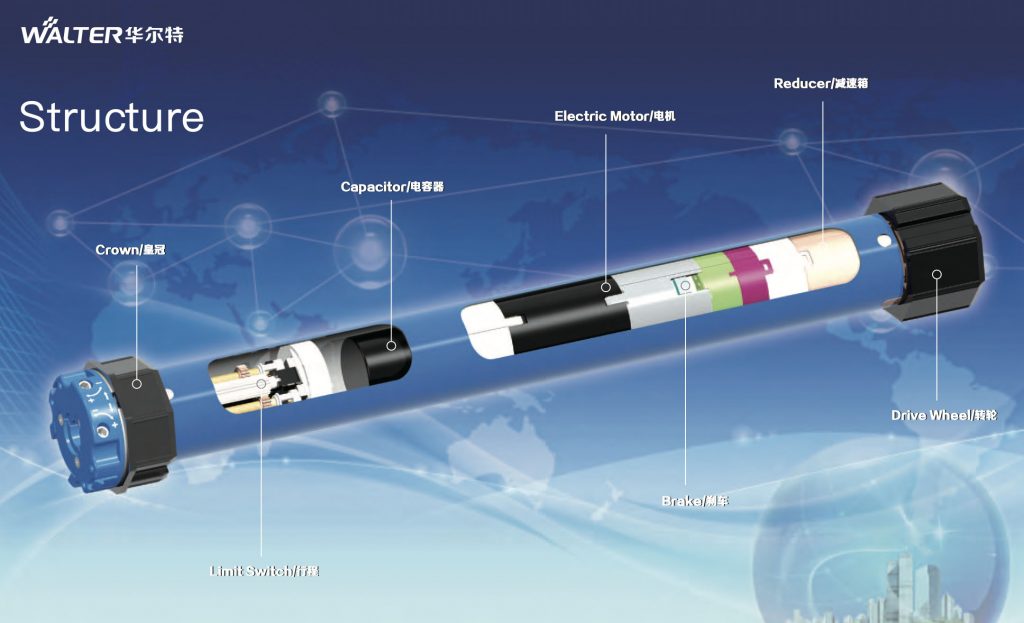
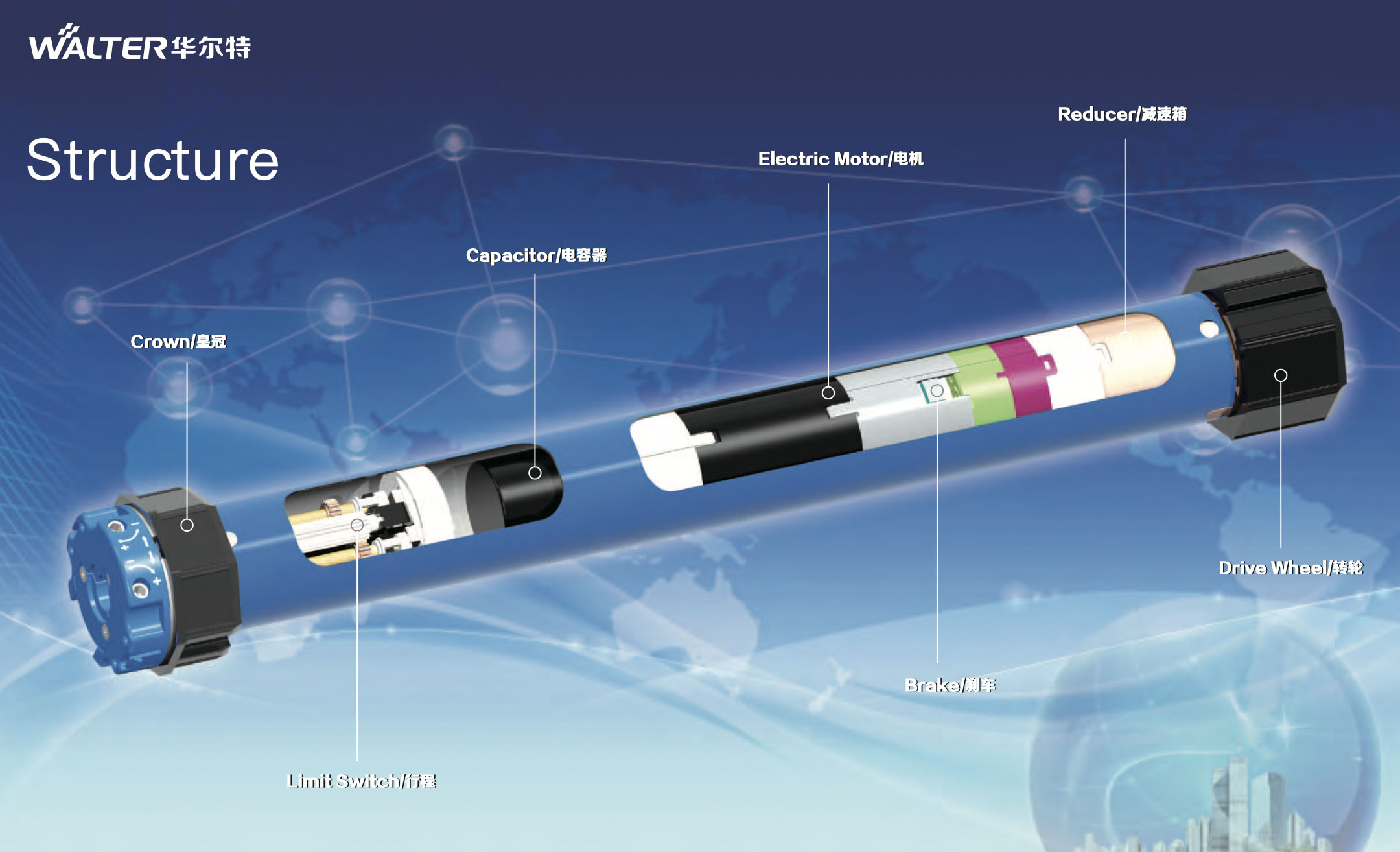
A tubular motor is built with a compact internal structure designed for efficient and reliable operation inside a roller tube.
If you are looking for a complete overview, you can read our detailed guide on what is a tubular motor and how it works.
Tubular Motor Internal Structure
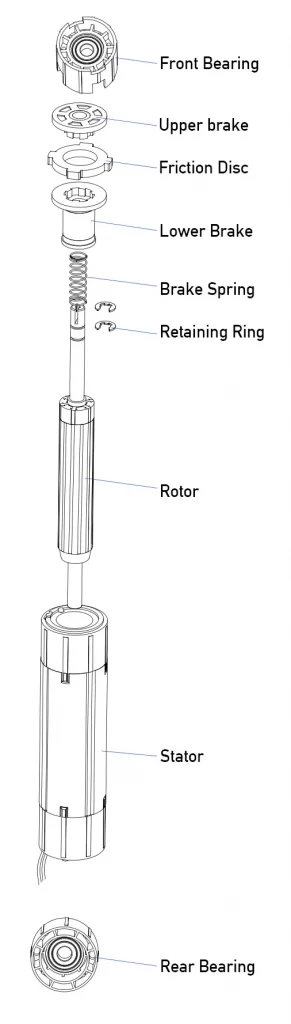
The internal Tubular motor structure consists of several mechanical and electrical components working together to deliver smooth motion and stable torque output.
Key structural elements include:
- Drive shaft system
- Brake assembly
- Electromagnetic components
- Bearing support system
This compact arrangement allows the motor to be installed directly inside the tube, improving efficiency and reducing installation space.
Key Tubular motor Components and Their Functions
Understanding each component helps in selecting the right motor for different applications.
Rotor
The rotor is the rotating part of the system, converting electromagnetic force into mechanical motion.
Stator
The stator generates a magnetic field that drives the rotor. It plays a critical role in power efficiency and stability.
Brake System
The braking mechanism ensures the motor stops precisely and prevents unwanted movement, especially in vertical installations.
Gear System
The gear mechanism reduces speed while increasing torque, allowing the system to handle different load requirements.
Bearing Housing
Front and rear bearing supports ensure smooth rotation and long service life.
Retaining Components
Circlips and internal supports keep all parts securely in place during operation.
Types of Tubular Motors
Tubular motors can be classified based on power supply, control method, and application.
AC Motors
These are widely used in roller shutters and heavy-duty applications due to their stable power output.
DC Motors
DC motors are quieter and more energy-efficient, commonly used in battery-powered or solar systems.
Smart Motors
Smart models support remote control, WiFi, or Zigbee integration, making them suitable for smart home systems.
Solar Motors
Solar-powered options are ideal for wireless installations and energy-saving projects.
Technical Considerations for Selection
When selecting a tubular motor, technical factors should be carefully evaluated.
Torque and Load Capacity
The required torque depends on the weight and size of the system. Heavier applications require higher torque output.
Tube Compatibility
Different tube diameters require matching motor sizes, such as 25mm, 35mm, or 45mm systems.
Installation Environment
Outdoor applications require higher durability and protection, while indoor systems focus on quiet operation.
Control Options
Depending on the project, users can choose between manual switches, remote control, or smart automation systems.
👉 Explore available configurations here:
👉 https://www.hualite.cn/products/tubular-motors/
Application Overview
Tubular motors are widely used across various automation systems:
- Roller blinds for indoor shading
- Roller shutters for security applications
- Awnings for outdoor sun protection
- Zip screens for wind-resistant shading
Each application requires different specifications and motor configurations.
FAQ
What are the main components of a tubular motor?
The main components include the rotor, stator, brake system, gearbox, and bearing structures.
What is the difference between AC and DC tubular motors?
AC motors provide stronger power for heavy loads, while DC motors are quieter and more energy-efficient.
How do you choose the right motor size?
It depends on tube diameter, load weight, and application requirements.
Conclusion
Understanding the structure, components, and types of tubular motors is essential for selecting the right solution for different applications.
For a complete explanation of working principles and applications, visit our full guide on tubular motor systems.